Assessment of Chemical Residues on the Preserved Smoked Fish in Wukari Local Government Area, Taraba State, Nigeria
DOI:
https://doi.org/10.5281/zenodo.18347459Keywords:
Chemical residues, preservation, smoked fish, post-harvest, deteriorationAbstract
Objective: This study investigated preservation practices, chemical applications, and perceptions of safety among smoked fishmongers in Wukari, Taraba State, over a 4-month period. The research specifically sought to identify the types of preservatives used, evaluate sellers' level of safety awareness, and determine the infrastructural barriers to adopting modern preservation technologies.
Method: A descriptive survey design was employed, utilising structured questionnaires administered to a sample of 148 fishmongers. Data were analysed using frequencies, percentages, and Chi-Square (χ2) tests to assess the statistical significance of demographic distributions and their relationship with fish-selling practices.
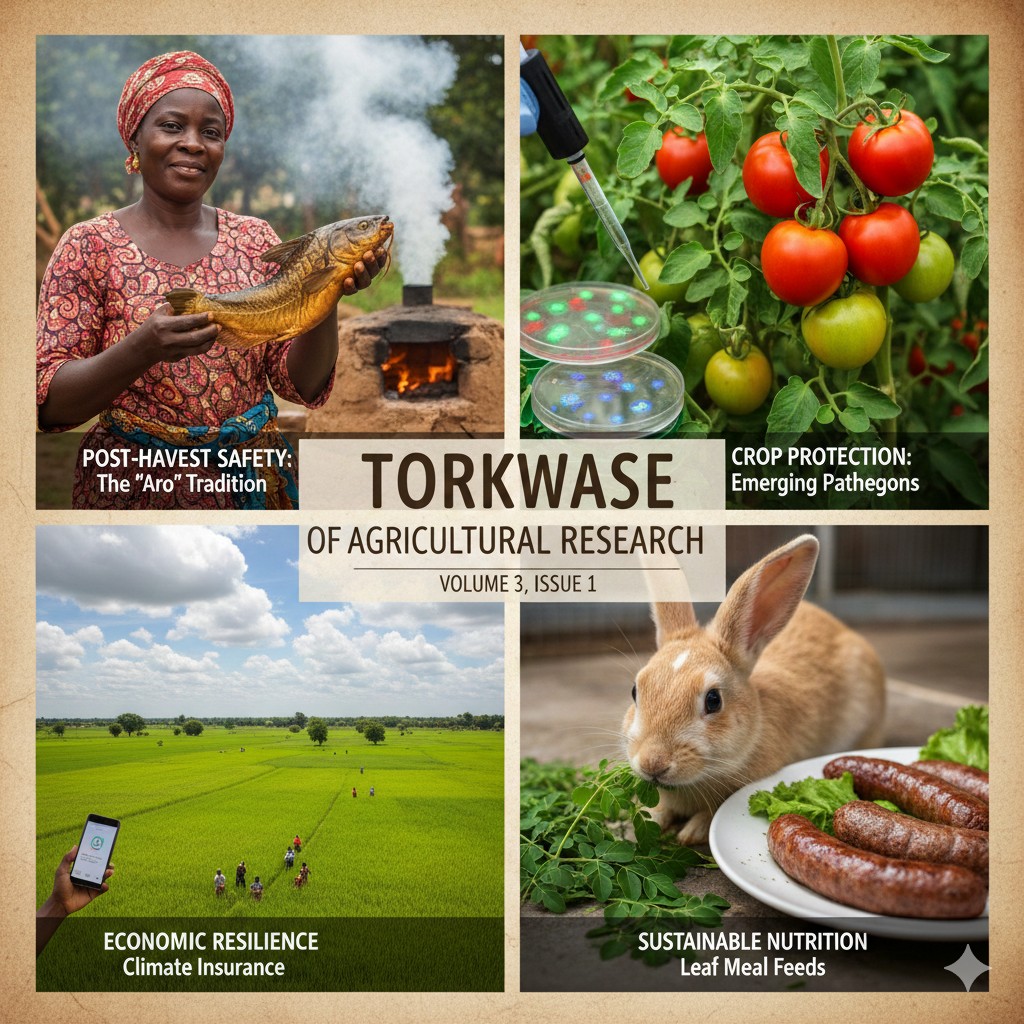
Result: The study revealed that the trade is a vital economic activity dominated by middle-aged women (76%), with 94% of respondents citing it as a significant source of household income. Traditional smoking techniques are overwhelmingly preferred (93%), with 100% of sellers utilising "Aro" (hardwood-derived smoke) for preservation rather than synthetic chemical additives. While 100% of respondents believe their methods are safe, a significant 45% are unaware of national food safety regulations. Furthermore, the adoption of modern methods is currently hindered by a lack of equipment (57%) and inadequate storage facilities (25%), despite 100% of sellers' willingness to transition to improved techniques if provided with resources.
Conclusion: The study concludes that the smoked fish industry in Wukari relies on deeply rooted traditional knowledge and hardwood smoking ("Aro"), which is perceived as safe by practitioners but lacks scientific validation. The "perception-safety gap" and infrastructural deficits highlight an urgent need for government intervention. Recommendations include subsidising modern kilns, implementing health education programs on the risks of smoke inhalation, and establishing regulatory oversight to align traditional expertise with modern food safety standards.
Downloads
Downloads
Published
Issue
Section
License
Copyright (c) 2026 Igbani, Flourizel, Okere, Akpevwe Efe , Datani, Bukuni Dominic (Author)

This work is licensed under a Creative Commons Attribution-NonCommercial-ShareAlike 4.0 International License.